
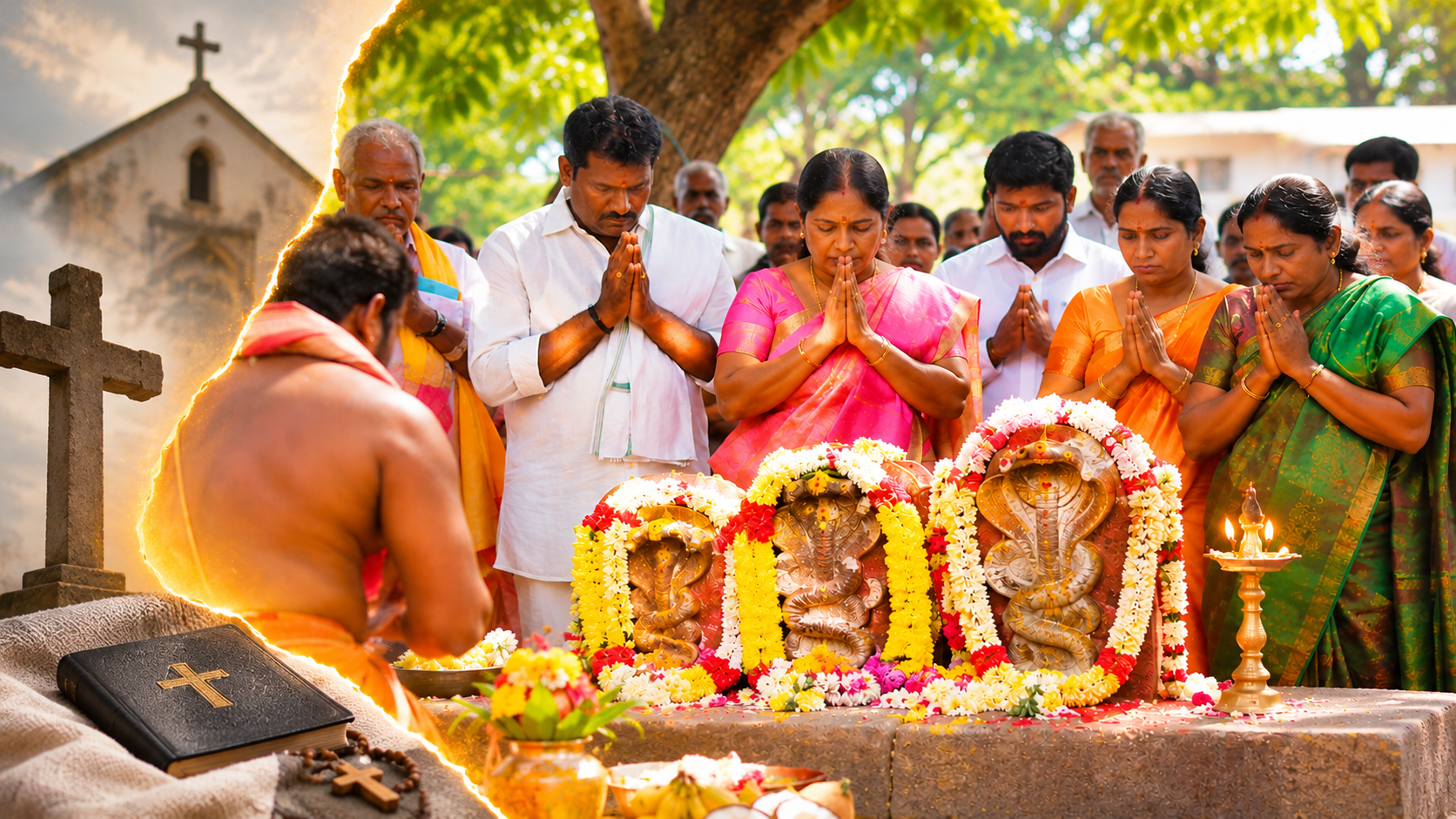
The preservation of cultural and spiritual traditions often finds its deepest meaning in the personal journeys of individuals and families. In Gajulapalli village of Kalyanadurgam Mandal, Andhra Pradesh, an initiative supported by the Global Hindu Heritage Foundation (GHHF) brought together a family returning to Hinduism and a traditional religious ceremony that held special significance for the village.
According to GHHF’s report dated August 29, 2024, fourteen individuals who had previously converted to Christianity returned to Hinduism. The programme culminated in the performance of Naga Prana Pratishtha, fulfilling a long-standing wish of a family member who had passed away.
A Family’s Return to Sanatana Dharma
The account describes how a Christian woman, along with her two sons and their wives, had been involved in visiting Hindu households and conducting prayers. GHHF pracharaks, together with Sri Gopi Krishna Garu, met with the families involved and held discussions that resulted in fourteen individuals returning to Hinduism.
The woman and her family had reportedly converted to Christianity around five years earlier. Her husband, however, had remained a practising Hindu and had strongly wished to establish a Naga shrine in the village. He passed away before he could fulfil this aspiration.
Following her return to Hinduism, Sri Gopi Krishna encouraged the woman to honour her late husband’s wish. She agreed, and the family took part in organizing the Naga Prana Pratishtha ceremony.
For the family, the occasion carried significance beyond the religious rituals. It represented an opportunity to honour a loved one’s memory while reconnecting with the traditions and spiritual practices that had been important to him.
The Significance of Naga Prana Pratishtha
Naga worship occupies an important place in Hindu religious traditions. Serpent deities, known as Nagas, are associated with sacred symbolism, nature, protection, fertility, and spiritual traditions connected with the land.
Naga Prana Pratishtha is a consecration ceremony through which a sacred image or representation of the Naga deity is ritually established for worship. Such ceremonies are generally conducted with Vedic prayers, offerings, and traditional homas.
Naga shrines are often established in open spaces, sometimes beneath sacred trees such as Peepal, Neem, or Shami. These trees themselves hold significance in Hindu traditions and are associated with reverence for nature.
The ceremony in Gajulapalli followed several traditional observances, bringing together religious worship, family participation, and community involvement.
A Traditional Ceremony with Community Participation
The programme began with devotees applying tilak and the reading of the gotras of those attending. Ganapati Puja and Navagraha Puja were performed, followed by offerings of milk to the Naga deities.
Several homas formed part of the religious proceedings, including Mrityunjaya Homa, Ganapati Homa, Navagraha Homa, Dosha Praveeta Homa, and Naga Devata Homa. Protection bracelets were tied to participants, and blessings were offered.
According to the GHHF report, approximately 80 to 100 people attended the programme. Prasadam and food were arranged for everyone, making the occasion an opportunity for collective participation and community gathering.
Preserving Traditions Through Community Engagement
The initiative reflected GHHF’s efforts to strengthen Hindu cultural awareness and encourage participation in traditional religious practices. Through the involvement of local pracharaks and community members, the programme brought attention to the importance of maintaining village shrines, observing traditional ceremonies, and passing religious customs to future generations.
The Foundation’s report also described plans to engage with the village committee regarding the maintenance of the shrine and the preservation of its religious character. Such efforts highlight the importance of community-led stewardship of places of worship, while respecting the freedom of individuals and families to make their own religious choices.
The Naga Prana Pratishtha in Gajulapalli was therefore both a religious occasion and a meaningful family milestone. By fulfilling the wish of the woman’s late husband, the family connected a personal memory with a wider community tradition.
For GHHF, the programme represented another effort to support Sanatana Dharma through grassroots participation, religious awareness, and the preservation of Hindu traditions.
Reference – Original GHHF Article:

Sai Srinivas
Latest posts by Sai Srinivas (see all)
- Returning to Roots: Fourteen Individuals Rejoin Hinduism and Participate in Naga Prana Pratishtha in Andhra Pradesh - 2026/11/16
- Satguru Sivaya Subramuniyaswami: A Visionary Who Brought Saivite Hinduism to the World - 2026/11/14
- Welfare or Dependency? Rethinking Minority Benefits Through Educational Opportunity and Self-Reliance - 2026/11/10