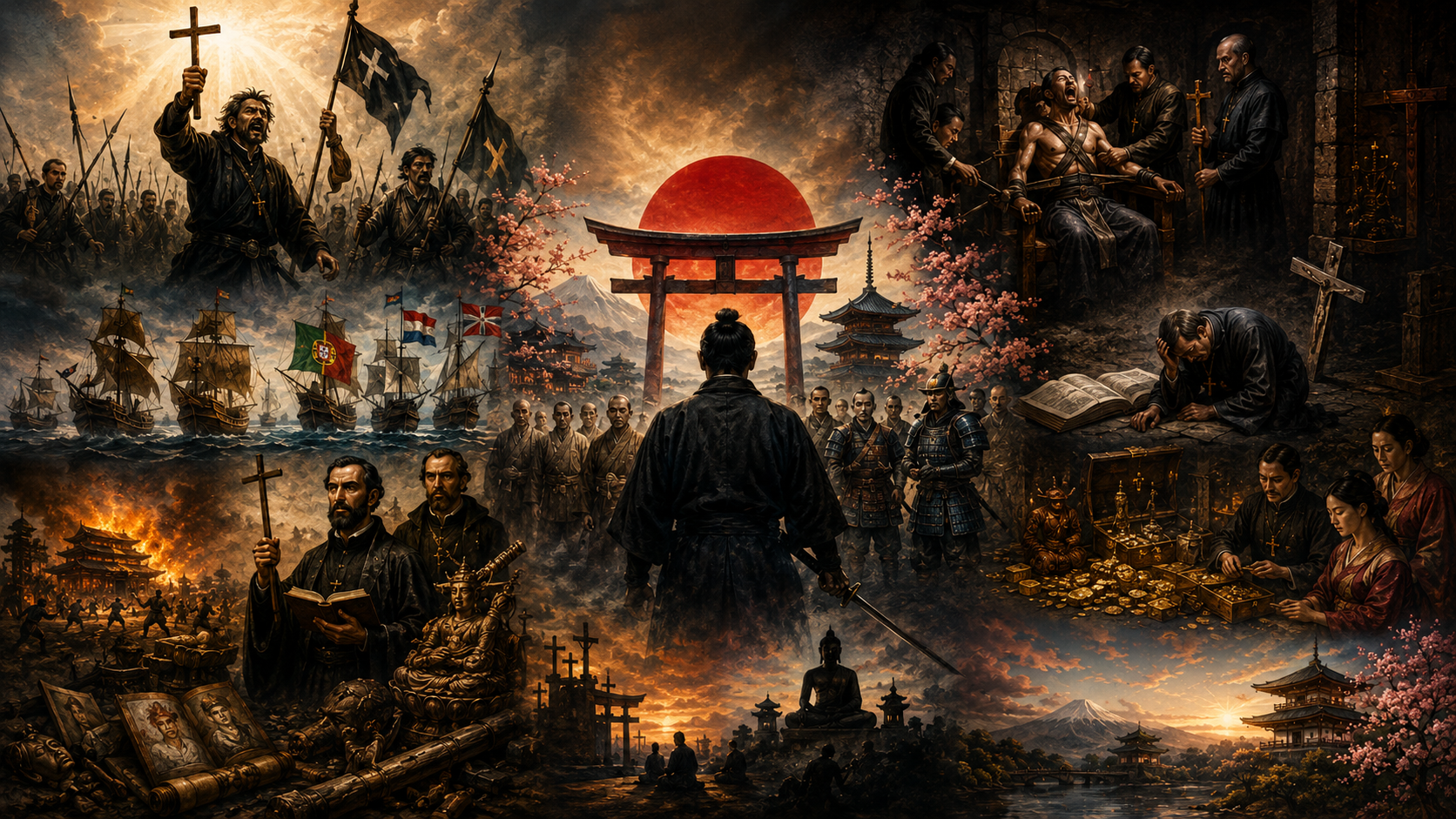
Why Martin Scorsese’s “Silence” is so Silent?

Film Review- Why Martin Scorsese’s “Silence” is so silent only about Catholic Inquisition and Christian atrocities on Natives across the world?

Martin Scorsese’s Silence is often praised as a profound meditation on faith, suffering, and spiritual endurance. Adapted from Silence, the film follows Jesuit missionaries in 17th-century Japan confronting persecution under the Tokugawa shogunate. The cinematography is haunting, the performances restrained, and the moral anguish palpable. Yet the film’s greatest silence may not be the one experienced by its tormented priests. It is the silence surrounding the historical record of Christian imperial violence itself.

Scorsese presents Christianity almost entirely through the lens of victimhood. Japanese authorities are shown employing brutal torture against converts and missionaries, leaving audiences with the impression of Christianity as a fragile, persecuted faith confronting civilizational cruelty. What remains conspicuously absent is any meaningful engagement with why many non-European societies came to view missionary expansion with suspicion in the first place.

By the 17th century, missionary activity was not merely spiritual outreach. Across Asia, Africa, and the Americas, it often moved alongside European imperial conquest. The Portuguese and Spanish empires carried the cross together with the sword. Indigenous traditions were suppressed, temples destroyed, native populations forcibly converted, and entire cultures restructured under colonial Christian authority.

The omission becomes especially glaring when considering institutions such as the Goa Inquisition, established by the Portuguese in India in 1560. Historical accounts describe forced conversions, destruction of Hindu temples, censorship of local customs, and persecution of those accused of practicing native faiths. Similar patterns unfolded in Latin America, where Spanish conquests devastated indigenous civilizations under explicit religious sanction. Yet in Silence, none of this broader context intrudes upon the moral universe of the missionaries.

This does not mean Japanese persecution was justified. States have committed atrocities in the name of ideological purity across civilizations and religions. But historical honesty requires acknowledging that Christian expansion was not perceived in a vacuum. Japanese rulers feared that missionaries were advance agents of European domination — a concern not entirely irrational given what had already occurred elsewhere in the world.

Scorsese’s film is artistically powerful precisely because it explores doubt, apostasy, and spiritual anguish with emotional seriousness. But it ultimately narrows history into a one-directional morality tale where Christian suffering is foregrounded while Christian power is backgrounded into invisibility.

In that sense, Silence is not truly silent. It speaks eloquently about persecution. It simply chooses not to speak about empire.

The following two tabs change content below.

Leave a Reply